
Loss Aversion in Trading: Why Traders Hate Losing More Than They Love Winning

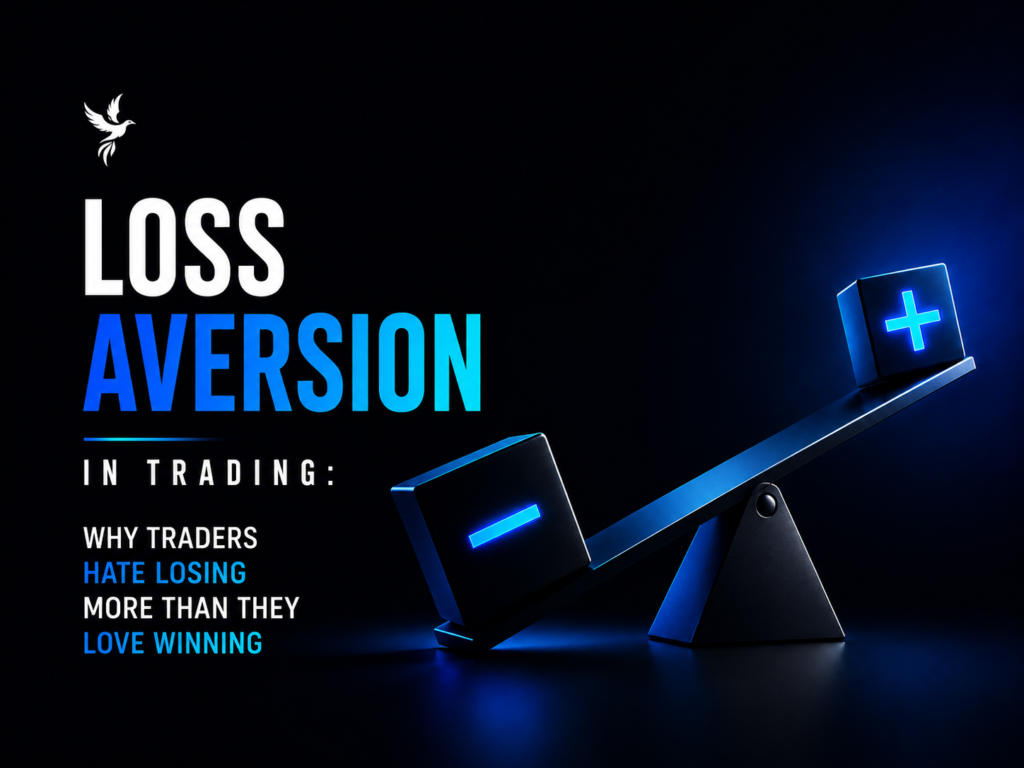
Loss Aversion in Trading: Why Traders Fear Losses
Loss aversion in trading is one of the most powerful psychological forces affecting forex traders. Many traders believe their biggest challenge is finding the perfect strategy, but the real challenge often begins after entering a trade. The fear of losing money influences decisions, weakens discipline, and causes traders to abandon well-planned strategies. Understanding loss aversion in trading is the first step toward making calmer and more consistent decisions.
What Is Loss Aversion in Trading?
Loss aversion is a psychological principle that suggests people feel the pain of losing more intensely than the satisfaction of gaining.
In simple terms, losing $100 often feels far worse than the happiness of making $100.
This emotional imbalance influences how traders behave in the market.
Instead of making objective decisions based on their trading plan, they begin reacting emotionally to avoid the discomfort of taking a loss.
How Loss Aversion in Trading Affects Forex Traders
Loss aversion appears in many different ways.
Holding Losing Trades Too Long
Many traders refuse to close a losing position because doing so makes the loss feel “real.”
Instead, they hope the market will reverse.
Sometimes it does.
Often it doesn’t.
A small, manageable loss can quickly become a much larger one.
Closing Winning Trades Too Early
Ironically, traders often do the opposite with profitable trades.
The moment they see a small profit, they rush to close the position.
Why?
Because they fear the market will take those profits away.
As a result, their winners remain small while their losers become large.
Over time, this creates an unhealthy risk-to-reward profile.
The Emotional Cycle of Loss Aversion in Trading
Many traders experience a repeating emotional cycle:
- Fear before entering a trade.
- Anxiety while the trade is open.
- Relief after taking a small profit.
- Hope when a losing trade moves against them.
- Regret after avoiding a planned stop loss.
- Frustration that leads to revenge trading.
This cycle has little to do with market conditions.
It has everything to do with human psychology.
Why Loss Aversion in Trading Feels So Powerful
Your brain is designed to protect you.
Throughout history, avoiding danger was essential for survival.
In trading, however, this survival instinct can work against you.
Your brain sees a losing trade as a threat.
It encourages you to avoid accepting the loss, even when closing the trade is the correct decision.
Understanding this natural response helps you recognize that emotional discomfort doesn’t always mean you’re making the wrong decision.
How Professional Traders Overcome Loss Aversion in Trading
Professional traders don’t enjoy losing.
But they understand that losses are part of the business.
Instead of focusing on individual trades, they focus on long-term performance.
They know that:
- Every strategy has losing trades.
- Risk management matters more than being right every time.
- Protecting capital is more important than protecting their ego.
- Following the trading plan is a success—even if the trade loses.
This mindset allows them to remain calm and disciplined.
How to Overcome Loss Aversion in Trading
You can’t eliminate emotions completely.
But you can reduce their influence.
Here are five practical habits:
1. Define Your Risk Before Entering
Know exactly how much you’re willing to lose before placing the trade.
2. Respect Your Stop Loss
A stop loss isn’t a sign of failure.
It’s a tool that protects your trading capital.
3. Think in Probabilities
No single trade determines your success.
Your edge plays out over many trades.
4. Keep a Trading Journal
Review your emotional reactions as carefully as your technical analysis.
Patterns become easier to identify over time.
5. Celebrate Good Decisions
Instead of celebrating only profitable trades, celebrate trades where you followed your rules.
This reinforces disciplined behavior.
A Question to Reflect On
Before closing your next trade, ask yourself:
“Am I making this decision because it follows my trading plan, or because I’m trying to avoid the emotional discomfort of taking a loss?”
That simple question can reveal whether psychology is driving your decisions.
Final Thoughts on Loss Aversion in Trading
The market doesn’t punish traders for taking losses.
It punishes traders who refuse to manage them.
Loss aversion is a natural part of human psychology, but it doesn’t have to control your trading.
When you learn to accept small losses, you give yourself the opportunity to protect your capital, remain disciplined, and stay focused on long-term consistency.
In trading, success isn’t about avoiding losses.
It’s about making better decisions, even when those decisions feel uncomfortable.
Because the traders who master their emotions are often the ones who master the market.
Continue Your Trading Journey
If you want to strengthen your trading psychology, join our community for weekly insights on emotional discipline, behavioral finance, risk management, and the mindset needed for consistent forex trading.
Remember:
Your biggest advantage isn’t predicting the next market move.
It’s learning how your mind reacts when money is on the line.

Responses