

The Emotional Cost of a Losing Day: What a Loss Really Does to a Trader

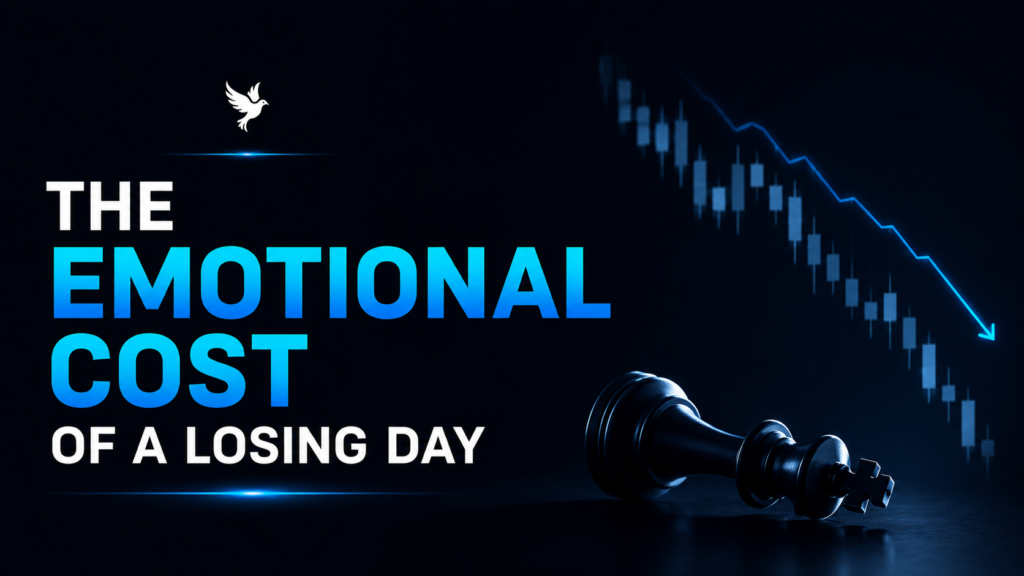
A losing day in forex can cost a trader more than money. It can affect confidence, decision-making, discipline and even the way you see your trading strategy. While losses are an unavoidable part of the market, the emotional reaction that follows can create bigger problems. For many traders, the real challenge isn’t accepting the loss. It’s resisting the urge to immediately win it back.
Losing money is part of trading. Every trader knows this before placing their first position. Yet knowing that losses are inevitable does not make them emotionally easy to handle.
A losing day in forex can affect far more than your account balance. It can change your confidence, distort your judgment, create doubt about your strategy, and make you feel an uncomfortable need to recover what you lost.
That is where the real danger begins.
The biggest damage from a losing day is not always the money that disappears from your account. Sometimes, it is the emotional reaction that follows.
A trader loses $100 and feels frustrated. Then comes another decision: “I need to make that $100 back.”
Suddenly, the objective is no longer to execute a good trade.
The objective is to recover a loss.
That small psychological shift can turn one ordinary losing day into a much bigger problem.
A Loss Can Feel More Personal Than It Should
After a losing day in forex, many traders immediately start looking for another opportunity.
There is a strange relationship between traders and their losses.
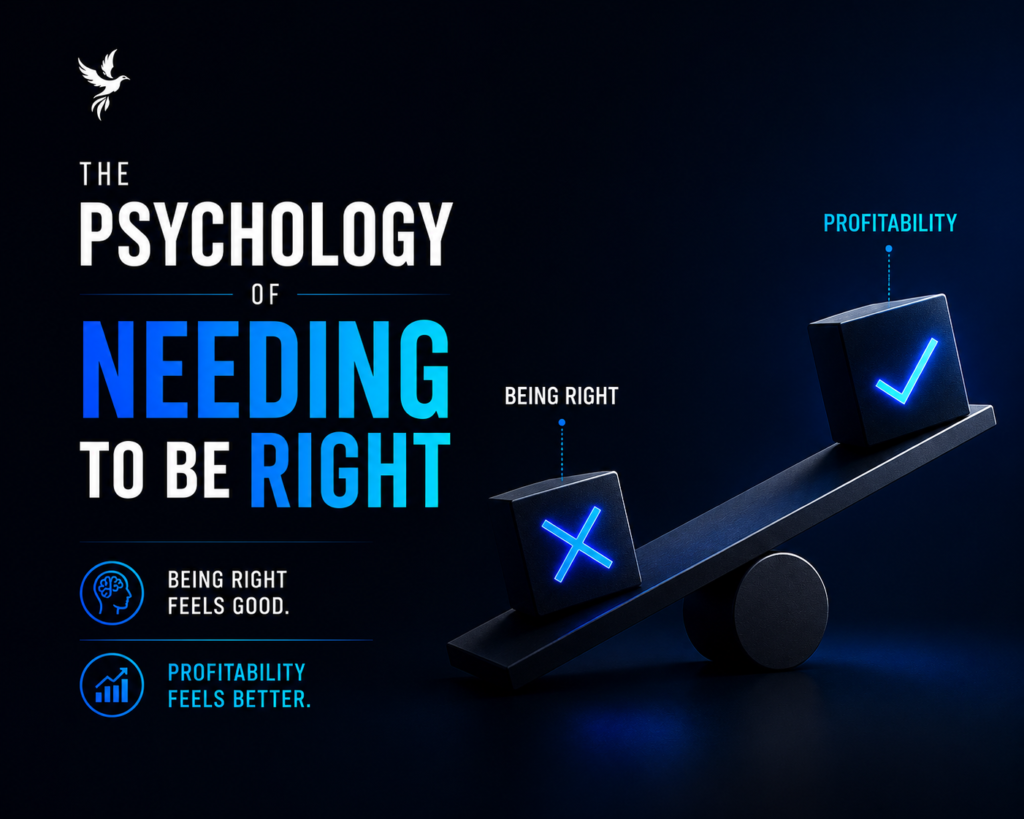
When a trade wins, many traders see the result as confirmation that they made the right decision.
When a trade loses, however, they often question themselves.
“How did I miss that?”
“Why didn’t I see the reversal?”
“Maybe my strategy doesn’t work.”
“Maybe I’m not good enough.”
This is where forex trading psychology becomes important.
A losing trade does not automatically mean you made a bad decision.
Markets are uncertain. Even a well-planned trade can lose.
You can identify the right setup, enter at a reasonable price, manage your risk correctly, and still watch the market move against you.
That is not necessarily failure.
It is simply the reality of trading probabilities.
The professional trader learns to separate the quality of the decision from the outcome of the trade.
That distinction can completely change how you experience losses.
The Difference Between Losing and Trading Badly
Imagine two traders.
The first trader takes a setup that meets every condition in their trading plan. The risk is controlled, the stop loss is respected, and the position is managed exactly as planned.
The trade loses.
The second trader sees a setup that doesn’t quite meet their criteria. They enter anyway because they don’t want to miss the move. The trade happens to win.
Who traded better?
The answer is the first trader.
The first trader experienced a losing outcome but demonstrated good execution.
The second trader experienced a winning outcome but demonstrated poor discipline.
This is one of the hardest lessons for developing traders to understand.
A winning trade can be a bad trade. A losing trade can be a good trade.
Once you understand that, your relationship with losses begins to change.
You stop asking only, “Did I make money?”
Instead, you start asking:
“Did I make a good decision?”
That is a much more valuable question.
What Happens Inside Your Mind After a Losing Day?
The way you respond to a losing day in forex can reveal a lot about your trading psychology.
The emotional process often happens gradually.
First comes disappointment.
Then frustration.
Then doubt.
Then the desire to recover.
The trader starts looking at the charts again.
Perhaps another setup appears.
It isn’t perfect, but it looks interesting.
Normally, the trader would ignore it.
Today feels different.
“Maybe this is the one.”
The trade is opened.
Now the trader isn’t simply watching price.
They’re watching their previous loss.
If the position wins, they feel relief.
If it loses, the emotional pressure becomes even stronger.
This is how revenge trading develops.
It doesn’t always begin with anger.
Sometimes it begins with a perfectly reasonable desire to finish the day differently.
Unfortunately, the market doesn’t care how your day started.
It doesn’t know that you lost money this morning.
It doesn’t owe you a recovery.
And it certainly doesn’t know that you need a winning trade before you go to bed.
The Emotional Need to “Get It Back”
One of the most dangerous thoughts a trader can have after a loss is:
“I just need to make it back.”
It sounds logical.
But think about what that statement does to your decision-making.
You are no longer evaluating the next trade based purely on your strategy.
You are evaluating it based on what you need emotionally.
A $50 trade is no longer just a $50 trade.
It represents the $50 you lost earlier.
A setup that should be evaluated independently is now carrying the emotional weight of the previous position.
That is dangerous.
The market should never be asked to repair your emotions.
Your next trade should be based on the opportunity in front of you, not the result behind you.
Ultimately, a losing day in forex doesn’t have to become a losing week.
Why Revenge Trading Feels So Tempting
Revenge trading is often misunderstood.
People imagine a trader becoming angry and immediately risking half their account.
That can happen.
More commonly, however, revenge trading is subtle.
It might be taking a trade five minutes earlier than planned.
It might be increasing your position size slightly.
It might be removing one confirmation from your strategy.
It might be moving your stop loss because you don’t want another loss.
None of these decisions necessarily look dramatic.
But together, they show something important:
The trader has stopped following the plan and started negotiating with the market.
Once that happens, discipline begins to disappear.
Your Confidence Can Take a Hit
Financial losses aren’t the only cost.
Confidence can be damaged too.
After several losing trades, a trader can begin questioning everything.
A strategy that worked last month suddenly looks useless.
A setup that used to feel clear now looks confusing.
The trader starts searching for a new indicator.
Then another strategy.
Then another mentor.
Then another trading system.
This is how one losing period can create strategy-hopping.
Instead of giving a strategy enough time and data to evaluate properly, the trader keeps changing systems whenever the results become uncomfortable.
The problem may not be the strategy.
The problem may be the trader’s inability to tolerate uncertainty.
A professional approach requires patience.
You need enough trades to evaluate whether your process has an edge.
One losing day cannot tell you whether your entire strategy works.
The Market Doesn’t Know You Had a Bad Day
This is worth remembering the next time you feel the urge to recover a loss.
The market has no memory of your previous trade.
It doesn’t know your account balance.
It doesn’t know your monthly target.
It doesn’t know that you need to pay a bill.
It doesn’t know that you promised yourself you’d finish the week in profit.
The market simply moves.
Your job is not to force it to compensate you.
Your job is to respond when your conditions appear.
That mindset sounds simple, but it is one of the foundations of professional trading.
Risk Management Protects More Than Your Money
Risk management is usually discussed as a way to protect trading capital.
It does that.
But it also protects your psychology.
Consider the difference between losing 0.5% on a trade and losing 10%.
The first may be uncomfortable.
The second can completely change your behavior.
You may start watching every tick.
You may move your stop.
You may become desperate for a reversal.
You may close the trade too early.
You may immediately look for another opportunity.
Your strategy might not have changed.
Your emotional state has.
This is why risk should be small enough that a normal losing trade doesn’t destroy your ability to think clearly.
A good risk level isn’t simply one your account can technically survive.
It should also be one you can emotionally handle.
The Most Dangerous Part of a Losing Day Can Come After the Market Closes
Sometimes the market closes and the trading continues inside your head.
You replay the chart.
You think about where you could have entered.
You imagine what would have happened if you had held longer.
You calculate how much you would have made if you had taken the opposite position.
Then you start planning tomorrow.
“Tomorrow, I’m getting it back.”
That sentence can carry a lot of emotional weight.
You wake up the next morning with something to prove.
That’s not a neutral trading mindset.
You’re carrying yesterday’s emotions into today’s market.
And when you enter the market with something to prove, you’re already giving the market too much control over your decisions.
What Should You Do After a Losing Day?
The answer isn’t to pretend you don’t care.
You should care.
Trading involves real money, and losses deserve serious reflection.
The difference is how you process them.
Start by stepping away from the charts.
Give yourself enough distance to review the day without emotion dominating the analysis.
Then ask yourself three questions.
Did I follow my trading plan?
If the answer is yes, the loss may simply be part of your strategy’s normal distribution of outcomes.
Did I manage my risk correctly?
If you risked what you planned to risk, one losing trade shouldn’t force you to change your entire approach.
Did my emotions influence the decision?
This is perhaps the most important question.
If the answer is yes, don’t simply blame yourself.
Identify exactly what happened.
Did you enter because of FOMO?
Did you increase your position?
Did you move your stop?
Did you revenge trade?
Did you trade because you were bored?
Specific answers create specific improvements.
Don’t Try to Fix Everything at Once
One of the biggest mistakes traders make after a losing period is trying to fix their entire trading career overnight.
They change their strategy.
They change their indicators.
They change their timeframe.
They increase their risk.
They watch more YouTube videos.
They follow new traders.
They start another account.
They do everything except slow down.
Sometimes the most productive response to a losing day is to do less.
Review the trades.
Identify the mistake.
Write it down.
Then return to your process.
You don’t need a completely new trading identity because you had a bad day.
You need a clearer understanding of what happened.
A Losing Day Can Be Valuable
This might sound strange, but losing days can teach you things winning days cannot.
A winning day can show you that your strategy worked.
A losing day can show you how you behave when your strategy doesn’t work.
That’s valuable information.
Maybe you discover that you become impatient after two losses.
Maybe you discover that you increase your risk after a losing trade.
Maybe you realize you struggle to walk away from the charts.
Maybe you discover that your position size is too large for your emotional tolerance.
These are not small discoveries.
They are part of becoming a better trader.
Your trading journal should therefore record more than profit and loss.
Record your behavior.
Because your behavior is often where your biggest edge is developed.
The Professional Mindset: Accept the Loss, Protect the Process
The goal of trading isn’t to avoid losing days.
That is impossible.
The goal is to prevent losing days from controlling what happens next.
A professional trader can close a day in the red and still feel satisfied with the execution.
Not because losing money feels good.
But because the trader knows:
“I followed my process.”
That is confidence worth having.
Not the confidence that comes from believing you’ll always win.
The confidence that comes from knowing you’ll remain disciplined regardless of the outcome.
That is a much stronger foundation.
Your Next Trade Should Have Nothing to Do With Your Last Trade
This may be the most important idea in this entire article.
Your previous trade is history.
The next trade deserves a fresh evaluation.
If your previous trade lost $100, the next setup doesn’t need to make $100.
If your previous trade won $200, the next setup doesn’t need to make another $200.
Every trade should stand on its own.
That is how you remove the emotional burden from your decision-making.
You are not trying to recover.
You are not trying to prove yourself.
You are simply executing your edge.
Final Thoughts
Every serious trader will eventually experience a losing day.
Some will experience many.
The difference between traders is not who loses and who doesn’t.
The difference is what happens after the loss.
One trader sees a losing day as proof that they aren’t good enough.
Another sees it as a reason to increase risk and make the money back.
A disciplined trader sees something different.
They see information.
They review the decisions.
They identify what they controlled.
They accept what they couldn’t control.
Then they step away and wait for the next opportunity.
Because the market will still be there tomorrow.
Your capital needs to be there too.
And sometimes, the greatest sign of trading maturity isn’t how you behave after a winning trade.
It’s how calmly you can walk away after a losing one.
Let’s Talk
Be honest with yourself:
What is the hardest part of a losing day for you?
A. Accepting the loss
B. Avoiding revenge trading
C. Staying confident in your strategy
D. Resisting the urge to make the money back
E. Walking away from the charts
Drop your answer in the comments.
You might discover that the psychological battle you’re fighting isn’t unique to you.
Responses