
Psychology of Being Right in Trading: Why Ego Costs Traders Money

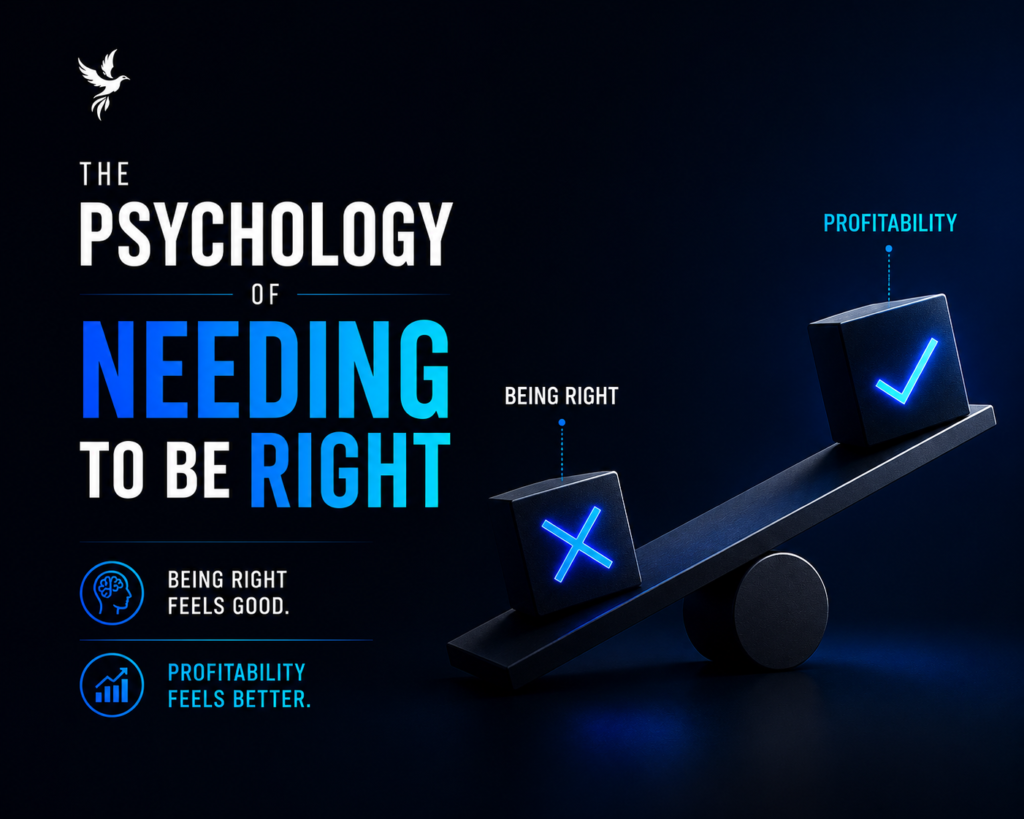
Psychology of Being Right in Trading is one of the biggest reasons traders struggle to achieve consistent results. Many forex traders become emotionally attached to proving their analysis is correct instead of following their trading plan. Understanding the psychology of being right in trading can help you control your emotions, accept losses, and make better decisions in every market condition.
Most traders believe their biggest goal is to make money.
But if we’re honest, many are chasing something else.
They want to be right.
Every winning trade feels like proof that they’re skilled.
Every losing trade feels personal.
This is where the psychology of being right in trading begins to influence decision-making. Instead of treating trading as a game of probabilities, many traders become emotionally attached to proving that their market analysis is correct.
The problem is that the market doesn’t reward traders for being right.
It rewards traders for managing risk and making disciplined decisions.
What Is the Psychology of Being Right in Trading?
The psychology of being right in trading is the emotional need to prove that your market opinion is correct—even when the market is showing you otherwise.
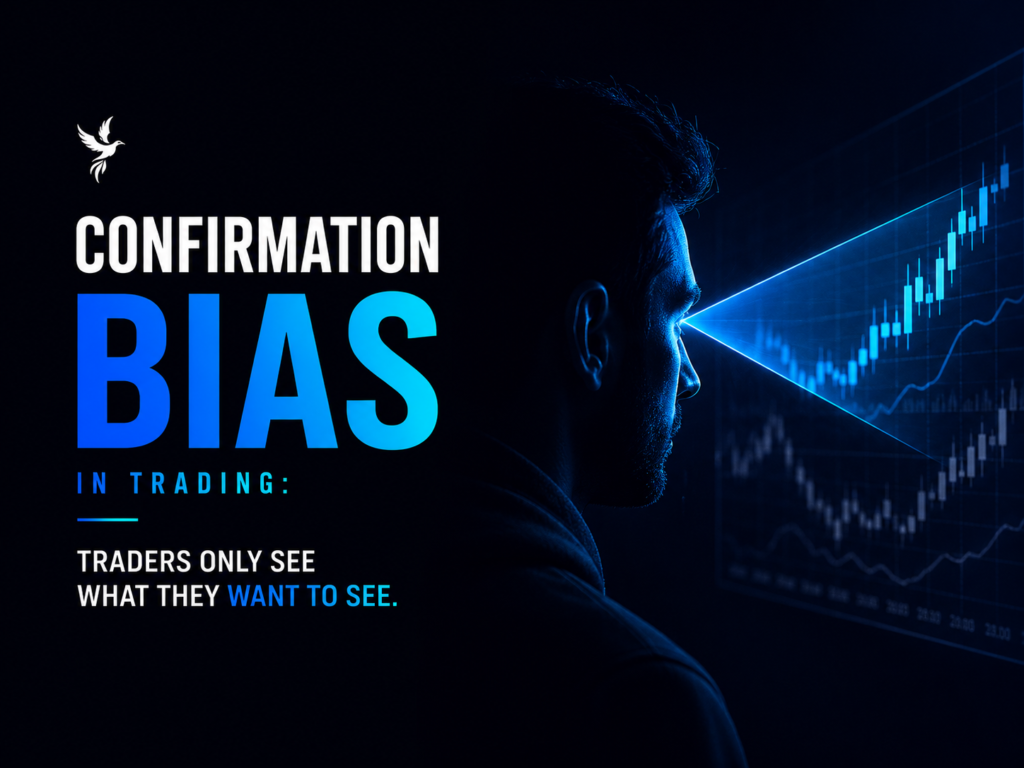
Instead of accepting new information, traders begin defending their original idea.
They ignore warning signs.
They dismiss opposing viewpoints.
They convince themselves the market will eventually prove them right.
This mindset slowly replaces discipline with ego.
Why the Psychology of Being Right in Trading Hurts Traders
Being wrong is uncomfortable.
Our brains naturally associate mistakes with failure.
In everyday life, admitting you’re wrong can feel embarrassing.
In trading, it can feel expensive.
That’s why many traders hold onto losing positions instead of accepting a small, controlled loss.
Closing the trade means accepting that the original idea didn’t work.
For many traders, protecting their ego becomes more important than protecting their capital.
How the Psychology of Being Right in Trading Leads to Bigger Losses
The need to be right rarely ends with one mistake.
It often creates a chain reaction.
Refusing to Respect a Stop Loss
Instead of closing the trade, the stop loss gets moved further away.
The trader hopes the market will eventually turn around.
Sometimes it does.
Often it doesn’t.
Adding to Losing Positions
Rather than accepting the loss, some traders increase their position size.
They believe they’re getting a better price.
In reality, they’re increasing their emotional commitment to a losing idea.
Ignoring Changing Market Conditions
Markets evolve.
News changes.
Momentum shifts.
But traders driven by ego continue searching for reasons to justify the same position.
The market has changed.
Their opinion hasn’t.
How Professional Traders Manage the Psychology of Being Right
Professional traders understand something that many beginners struggle to accept.
Being wrong isn’t failure.
Refusing to adapt is.
Professional traders ask themselves:
“What if my analysis is wrong?”
Instead of defending an opinion, they prepare for multiple outcomes.
They understand that one losing trade says nothing about their ability as a trader.
Their confidence comes from following their process—not from being right every time.
Signs the Psychology of Being Right in Trading Is Affecting You
Ask yourself honestly:
- Do I become frustrated when a trade proves me wrong?
- Do I hold losing trades longer than planned?
- Do I move my stop loss to avoid taking a loss?
- Do I ignore evidence that contradicts my analysis?
- Do I feel the need to “win back” my money immediately?
If you recognise these behaviours, your biggest challenge may not be the market.
It may be your relationship with being wrong.
How to Overcome the Psychology of Being Right in Trading
1. Think in Probabilities
Every trade has uncertainty.
Even the best setups fail.
Your goal isn’t to predict every move.
Your goal is to execute your edge consistently.
2. Separate Your Identity from Your Trades
A losing trade doesn’t make you a bad trader.
It simply means one trading idea didn’t work.
Don’t confuse your self-worth with your trading results.
3. Respect Your Trading Plan
Your trading plan should make decisions before your emotions do.
When the stop loss is hit, the trade is finished.
No negotiations.
4. Learn to Say, “I Was Wrong.”
This simple sentence can save your trading account.
The faster you accept a mistake, the faster you can move on to the next opportunity.
5. Measure Discipline Instead of Accuracy
Don’t ask:
“How many trades did I win?”
Ask:
“How many trades did I follow my plan on?”
That’s the question that creates long-term consistency.
A Challenge for This Week
Before placing your next trade, write down one sentence:
“If this trade fails, I will accept the loss without changing my rules.”
Read it before every entry.
It’s a simple reminder that your job isn’t to prove yourself right.
It’s to manage risk professionally.
Final Thoughts on the Psychology of Being Right in Trading
The market doesn’t care about your opinions.
The market doesn’t reward opinions.
Instead, it rewards discipline.
Ultimately, your emotions have no influence on price movement.
The traders who succeed over the long term aren’t the ones who are right the most.
They’re the ones who know how to be wrong without letting their emotions take control.
Remember this:
Every time you accept a small loss with discipline, you strengthen the mindset of a professional trader.
Sometimes, the most profitable words you’ll ever say are:
“I was wrong—and that’s okay.”
Because consistency isn’t built on always being right.
It’s built on knowing how to respond when you’re wrong.
Continue Your Trading Journey
If you’re committed to becoming a more disciplined trader, join our community each week as we explore the psychology behind trading decisions, emotional control, risk management, and the habits that help traders achieve long-term consistency.
Master your emotions, and the results will follow.

Responses