
Confirmation Bias in Trading: Avoid Costly Mistakes

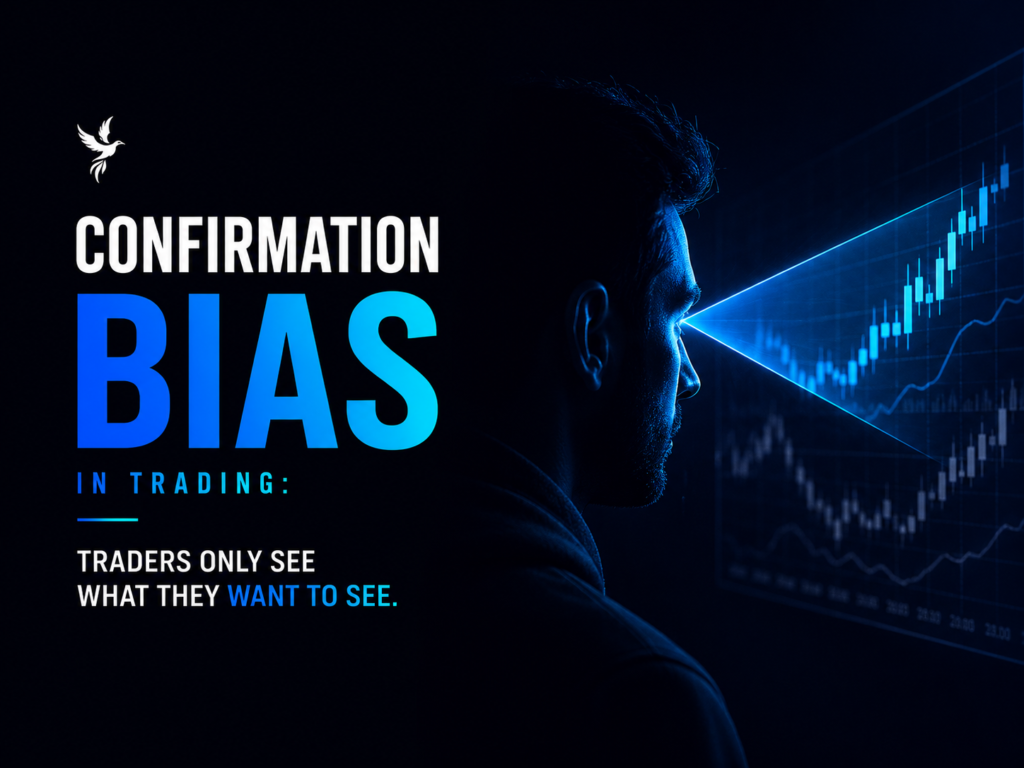
Confirmation Bias in Trading: Why Traders Only See What They Want to See
Confirmation Bias in Trading is one of the most common psychological mistakes forex traders make. Many traders believe they analyse the market objectively, but they often look for information that confirms what they already believe while ignoring evidence that proves them wrong. Understanding confirmation bias in trading can help you make better decisions, manage risk more effectively, and become a more disciplined trader.
Most traders believe they make decisions based on facts.
The charts.
The indicators.
The news.
Price action.
But psychology tells us something different.
One of the most common mental traps in forex is confirmation bias in trading—the tendency to search for information that supports what we already believe while ignoring evidence that suggests we’re wrong.
This bias quietly influences how traders analyse the market, manage risk, and respond to losing trades. Understanding it is essential if you want to become a more disciplined and objective trader.
What Is Confirmation Bias in Trading?
Confirmation bias in trading is the tendency to favour information that agrees with your existing opinion while dismissing anything that challenges it.
Imagine you’ve convinced yourself that EUR/USD is going to rise.
Instead of analysing the market objectively, you begin looking for reasons to justify your idea.
You watch videos from bullish traders.
You read bullish market analysis.
You ignore bearish signals.
You convince yourself the trade is “obvious.”
The problem is that the market doesn’t reward opinions.
It rewards objectivity.
How Confirmation Bias in Trading Affects Forex Traders
This psychological bias appears in many ways.
Ignoring Warning Signs
Your trading plan tells you to wait for confirmation.
Instead, you enter early because you already believe you know what’s going to happen.
Following Only Opinions You Agree With
Many traders only follow analysts who share the same market view.
Rather than seeking balanced perspectives, they build an echo chamber that reinforces their beliefs.
Holding Losing Trades Too Long
When a trade moves against them, they don’t reassess the market.
Instead, they search for more reasons to stay in the trade.
Hope replaces analysis.
Rejecting New Information
Markets change.
Conditions change.
Good traders adapt.
But confirmation bias makes adaptation difficult because admitting you’re wrong feels uncomfortable.
Why Confirmation Bias in Trading Is So Dangerous
Your brain prefers certainty.
Agreeing with your own opinion feels safe.
Being wrong feels uncomfortable.
That’s why your mind naturally searches for information that protects your existing beliefs.
This behaviour is normal.
But in trading, it can become expensive.
The market has no obligation to prove you right.
Signs You’re Experiencing Confirmation Bias in Trading
Ask yourself these questions:
- Do I only read analysis that supports my trade?
- Do I ignore signals that disagree with my opinion?
- Do I become emotionally attached to one market direction?
- Do I struggle to admit when my analysis is wrong?
- Do I stay in losing trades because I believe the market “must” reverse?
If you answered “yes” to several of these, confirmation bias may be affecting your trading decisions.
How Professional Traders Avoid Confirmation Bias in Trading
Professional traders understand that being wrong is part of the business.
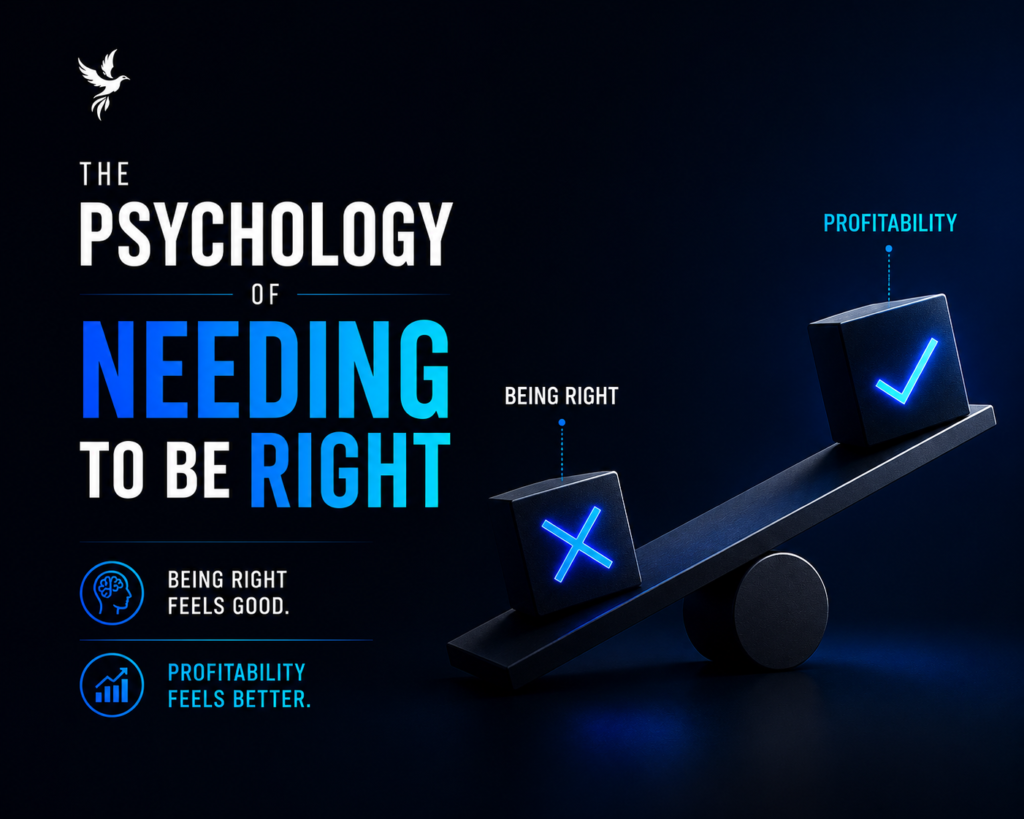
Their goal isn’t to prove themselves right.
Their goal is to protect capital and make disciplined decisions.
They regularly ask themselves:
“What evidence would prove my trade idea is wrong?”
This simple question keeps them open-minded and reduces emotional attachment.
They also:
- Review both bullish and bearish scenarios.
- Wait for confirmation before entering.
- Respect their stop-loss levels.
- Accept new information without ego.
- Change their opinion when the market changes.
Their confidence comes from following a process—not defending a prediction.
How to Overcome Confirmation Bias in Trading
1. Challenge Your Own Analysis
Before entering a trade, actively look for reasons not to take it.
2. Follow Different Viewpoints
Read analysis from traders with opposing opinions.
You don’t have to agree with them, but you should understand them.
3. Create a Trading Checklist
A written checklist keeps decisions based on rules instead of emotions.
4. Accept That Being Wrong Is Normal
Successful traders don’t win every trade.
They simply manage losses well.
5. Review Every Trade Honestly
After each trade, ask:
- Did I ignore any warning signs?
- Did emotions influence my analysis?
- Would I take the same trade again?
These questions help you identify psychological patterns before they become habits.
A Simple Exercise for This Week
The next time you analyse the market, write down three reasons for the trade…
Then force yourself to write down three reasons against it.
If you can’t argue against your own idea, you’re probably not analysing objectively.
You’re defending an opinion.
Final Thoughts on Confirmation Bias in Trading
The market doesn’t care whether you’re confident.
It doesn’t care how much analysis you’ve done.
And it certainly doesn’t care whether you believe you’re right.
Your job as a trader isn’t to predict every move.
Your job is to stay objective.
The moment you become emotionally attached to an opinion is the moment your analysis begins to suffer.
Remember:
The best traders don’t look for proof that they’re right.
They look for the truth—even when it proves them wrong.
Master your psychology, and you’ll make better decisions long before you place your next trade.
Continue Your Trading Journey
If you’re serious about improving your trading psychology, join our community for weekly insights on behavioural finance, emotional discipline, and practical habits that help traders build long-term consistency.
Because the strongest edge in trading isn’t always found on the chart.
Sometimes it’s found in the way you think.
If you’ve struggled with emotional decisions, listen our podcast on Why Sniper Entries Wont Save You.

Responses